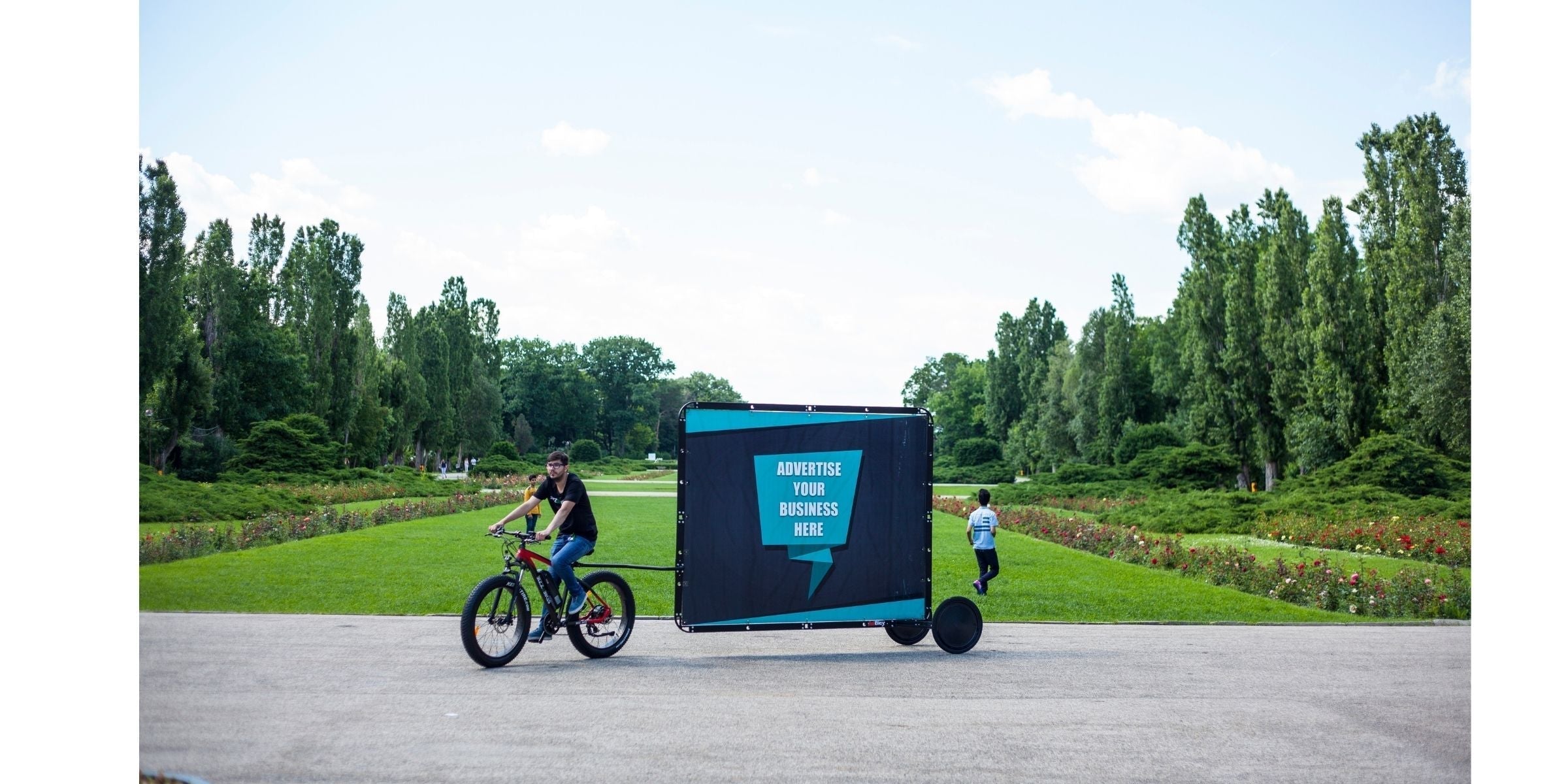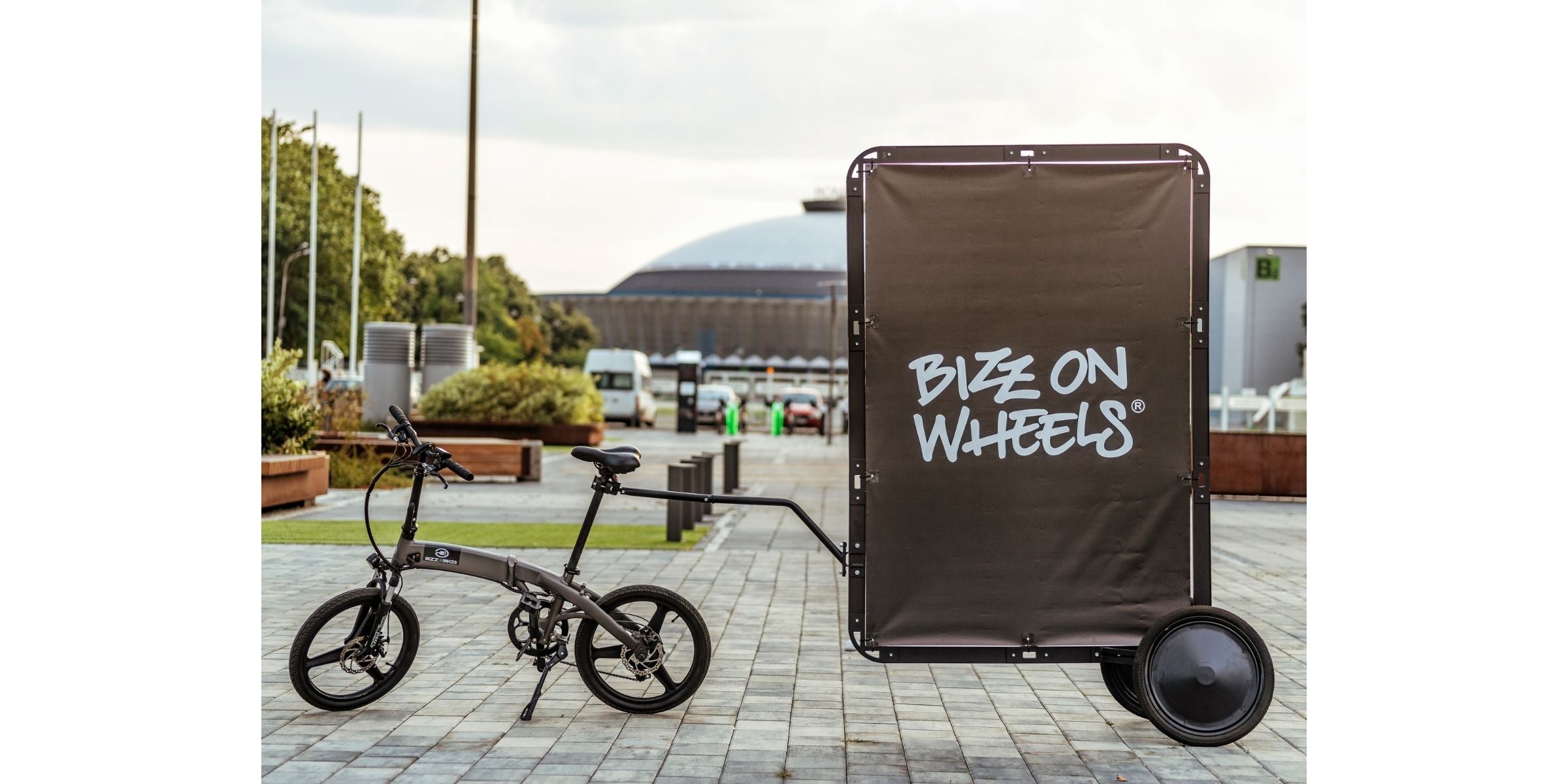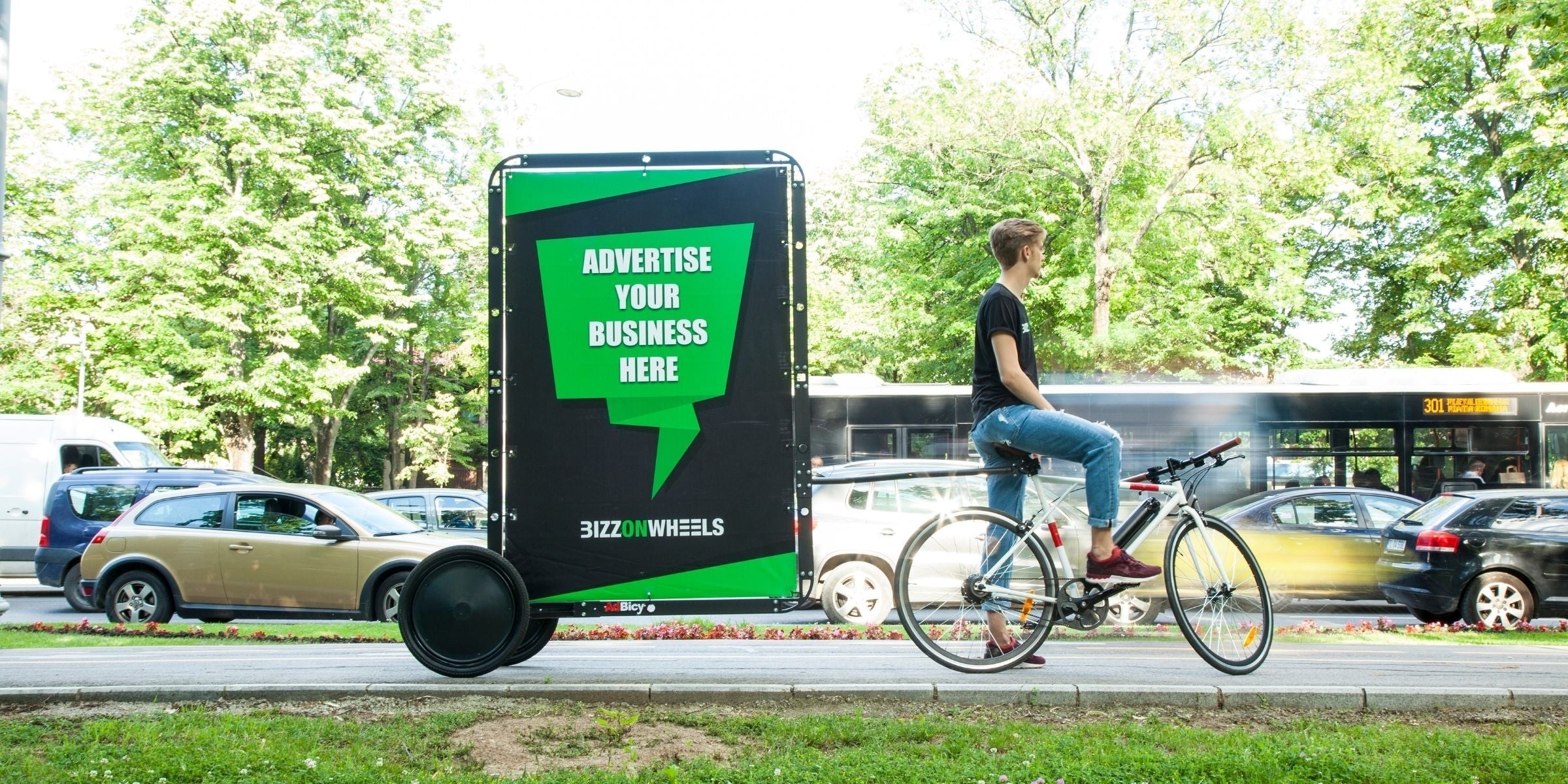
How To Build A Bike Billboard Rental Business In The Age Of Experiential Marketing
Most brands know they could own a fleet of advertising bikes, but they usually don’t find it appealing. After 15 years working with Adbicy mobile billboards, I’ve seen a clear pattern: marketers want the results that Adbicy and promobikes deliver on the street, but they don’t want the hassle of storage, maintenance, or staffing. They prefer mobile visibility as a service they can use when needed, not as a big investment. This creates a real opportunity for entrepreneurs interested in outdoor media, urban mobility, and experiential marketing.

This is a great time to get started. Out-of-home advertising is now one of the most stable parts of the media industry. In 2024, the global outdoor advertising market reached about $41 billion and is expected to grow to $68 billion by 2033, outpacing many traditional channels as brands look for ways to stand out from digital overload. IMARC Group. Digital and non-traditional out-of-home formats, like digital billboards, mobile billboards, and bike-based ads, are growing the fastest because advertisers want campaigns that combine real-world presence with measurable results. Grand View Research. Money is already flowing into this space. The real question is who will take advantage of it on the street.
Why mobile bike billboards punch above their weight
The main advantage of mobile billboards isn’t just their appearance. They are cost-effective and great at catching people’s attention. Billboards still have some of the best brand recall in advertising: recent studies show that up to 55% of people remember brands they see on billboards, which is much higher than many digital ads. mediafinch.net When billboards travel through the city on trucks, trailers, or bikes, recall rates go even higher. Some mobile billboard companies say that nearly 97% of people remember digital mobile ads, a level that traditional static billboards rarely reach. A promobike or Adbicy unit moves at eye level through busy city streets, combining motion, size, and closeness. People naturally notice movement, and a big, creative display is hard to ignore. Research shows that mobile billboard campaigns often cost less per impression than TV, radio, or many online ads, especially for local businesses and events. For BizzOnWheels, which has used Adbicy mobile billboards in campaigns across Europe, this is a daily reality.

At the same time, brands are once again seeing the value of real-world experiences. Global spending on experiential marketing is expected to go over $128 billion in 2024, with both B2C and B2B marketers increasing their budgets for live events, pop-ups, and street-level activities. When brands plan these events, adbikes and mobile billboards become moving centerpieces. They can lead parades, circle festivals, pass by trade shows, or guide customers from metro stations to store openings. In cities with strong cycling cultures, like Amsterdam and Tokyo, bike billboards have already proven they can help local businesses and civic campaigns.
For most marketers, the real question isn’t whether this format works. It’s about who will manage it for them.

From idea to identity: treating the service like a media brand
If you are coIf you’re thinking about starting a bike billboard rental business, your first step isn’t buying equipment. It’s building your brand as a credible media operator. In reality, agencies and marketing managers don’t wake up thinking, “I should rent some bikes.” They think about media channels and experiential ideas: “We need a hyperlocal, mobile out-of-home format to support this product launch.” Your brand should fit into that category in their minds, chosing a name and identity that show you specialize in mobile billboards and ad bikes, not just a delivery service. Make sure you can get a .com or a strong local domain, grab social media handles on Instagram, TikTok, LinkedIn, and Facebook, and create a clear visual style with a logo, colours, and photos. This tells buyers you’re a professional, not just running a side project. Agencies often work with small providers, but they expect them to act like real media partners.
A simple website can serve as both your storefront and your portfolio. At first, one clear landing page is often enough if it does three things: shows real photos of adbikes and promobikes in action, clearly explains your services, and makes it easy for people to request a quote. This is also where you can start building your SEO with keywords like “mobile billboards,” “bike billboard rental,” and “experiential marketing campaigns,” putting your brand in the same space that BizzOnWheels has helped shape over the last decade.
Designing the product: selling outcomes, not hardware
The main decision in this business is how you package your services. In most places, simply renting out equipment isn’t enough. The most successful companies offer two related products.
The first option is a full-service experiential marketing package built around adbikes. Here, clients buy a campaign, not just a bike. This includes branded Adbicy units, trained riders or brand ambassadors, route planning, on-site supervision, and basic reporting such as photos, route logs, and high-impact content for their social channels. For brands and agencies under time pressure, this is the most valuable version of your business because it removes obstacles at every step.
The second option is a simple rental without riders. This works well for political campaigns, NGOs, activist groups, and companies that already have their own teams and just need the advertising platform. In these cases, you provide the structure, panels, and sometimes delivery and pick-up. Since your fixed costs are covered by the full-service work, you can price this option more flexibly and keep your equipment in use between larger campaigns.
By offering both full-service campaigns and equipment-only rentals, you can serve both large agencies and smaller local businesses with limited budgets. This approach also matches how professional outdoor media is usually sold: as a mix of inventory, service, and data.
Logistics: the unglamorous backbone of a promobike fleet
On Instagram, mobile billboards look easy: shiny Adbicy frames, smiling riders, and beautiful city scenes. In reality, it’s more like running a small logistics company. Bikes and panels are rarely where campaigns begin. They need to be moved, serviced, stored, and deployed on time, often dealing with weather and traffic challenges.
At a minimum, you’ll need a van or trailer to move several units at once, plus reliable transport for your riders. A small warehouse or secure garage, even just 40 to 60 square meters, will serve as your base for bikes, banners, tools, and spare parts. If you cut corners here, you risk losing money quickly. If a bike breaks down during a campaign or riders are late because of poor planning, clients won’t blame the city. They’ll blame you.out-of-home industry has learned this lesson many times. Research shows that advertisers care most about visibility, efficiency, local presence, and quick responses when picking suppliers. A bike billboard rental business is no different it just means you have to meet these expectations even faster and in busier areas. Make logistics a key part of your brand, not just a behind the scenes task.

Pricing with discipline: understanding your unit economics
The excitement of street marketing can fade quickly when you realize that, after paying for riders, fuel, storage, and printing, you might work a ten hour day for the price of a coffee. The answer is to treat your mobile billboard service like a media product with clear costs and pricing.ay to manage this is to separate your fixed monthly costs like warehouse rent, utilities, staff, insurance, vehicle leases, and software from your variable campaign costs, such as rider pay, banner printing, fuel, van rental, and daily maintenance. Divide your fixed costs by the number of working days in a month to find your daily baseline the amount you spend whether or not bikes are out. Each campaign day should bring in more than this baseline after you add variable costs.
Next, use this information to set your prices. For example, if your total daily cost per unit, including depreciation, is about €190, charging around €280 per Adbicy per day gives you a good margin and keeps you competitive in most European cities, especially given the high visibility and recall of mobile billboards compared to many digital ads. Banner production is usually a separate charge. Depending on your suppliers, a full set of high-quality, double-sided banners typically costs €200–€400.
Consistency is what matters most. Agencies need to be able to open your rate card and quickly estimate the budget impact of adding three promobikes to a product launch or festival activation. Clarity builds trust and leads to repeat bookings. Regulation, market testing, and the importance of local nuance

Unlike digital ads, adbikes face different rules in every city. Some cities treat them as regular outdoor ads, others see them as special street activities, and some have restrictions in pedestrian areas or historic centers. Before you start, talk to local authorities to find out what permits or fees apply and where you can operate. This protects your business from fines and gives clients peace of mind that their campaign will not run into legal trouble.
In smaller cities, or places with fewer than 500,000 people, the main challenge is demand, not regulations. It’s smart to test the market before investing in a full fleet. Talk to local retailers, marketing managers, and agencies to see which sectors are interested, such as FMCG brands launching new products, real estate developers, cultural groups promoting festivals, or political parties wanting visibility. Early test campaigns, even if they just break even, can give you the photos and case studies you need to attract bigger clients later.
Growing by acting like a media company, not a bike shop
Once your operations are set up, growth depends more on how you share your story. The top brands today don’t just buy ads. They act like publishers and entertainment companies, turning every campaign into content that reaches far beyond the people who see it in person. A bike billboard rental business fits this trend perfectly. Every campaign is like a live event in the city. Filming routes, crowds, reactions, and behind-the-scenes work gives you content for TikTok, Instagram Reels, and LinkedIn case studies. Over time, you’ll see that every campaign should create the content that helps sell your next one. Even on days without bookings, you can post about equipment prep, route planning, rider training, or client feedback to keep your brand visible to potential buyers.
In this way, you become both a mobile billboard provider and a nimble experiential media brand. That’s a strong position, especially now when marketers need campaigns that are memorable in person and easy to share online. It’s also a competitive advantage. Anyone can buy a bike, but not everyone can run a smooth campaign, handle city rules, and deliver the results and content agencies want. With creative problem-solving, this is a niche with real traction. The capital requirements are modest compared to many other media businesses. The work is visible, tangible, and often fun, and the larger trends from the growth of outdoor advertising to the boom in experiential marketing—are moving in the right direction. High-quality, purpose-built units like the Adbicy L allow every kilometer ridden to serve as a premium out-of-home impression, a piece of live theatre, and a piece of content, all at once.
If you can combine that hardware with a clear brand, disciplined economics, and consistent storytelling, a bike billboard rental business stops being a quirky side project and becomes what it truly is: a focused, modern media company on two wheels.
References
· Outdoor Advertising Global Market Size and Forecast – IMARC Group
https://www.imarcgroup.com/outdoor-advertising-market
· Global digital out-of-home advertising market outlook – Grand View Research
https://www.grandviewresearch.com/horizon/outlook/digital-out-of-home-advertising-market-size/global
· Billboard effectiveness and brand recall statistics – MediaFinch
https://mediafinch.net/billboard-advertising-effectiveness-statistics/
· Mobile billboard effectiveness and cost efficiency – Movia Media
https://moviamedia.com/moving-billboard-blog/how-effective-are-mobile-billboards/
· Mobile billboard recall rates (up to 97%) – AdMobileTV
https://admobiletv.com/faq/
· Effectiveness of mobile billboard advertising – LedCraft
https://www.ledcraftinc.com/studying-the-effectiveness-of-mobile-billboard-advertising/
· Use and effectiveness of billboards – ResearchGate paper
https://www.researchgate.net/publication/250174319_Use_and_Effectiveness_of_Billboards_Perspectives_from_Selective-Perception_Theory_and_Retail-Gravity_Models
· Experiential marketing statistics and spending growth – G2 Learning Hub
https://learn.g2.com/experiential-marketing-statistics
· Experiential marketing spend surpassing pre-pandemic levels – Marketing Dive
https://www.marketingdive.com/news/experiential-marketing-spending-surpasses-pre-pandemic-levels-2024/730031/
· Experiential marketing trends and stats – TeamTecna
https://www.teamtecna.com/news-and-resources/experiential-marketing-statistics/
· 2024 experiential trends report (PDF) – Emota Experiences
https://emotaexperiences.com/content/uploads/sites/11/2024/05/2024Trends.pdf
· Bicycle billboard & bike advertising case examples – Medium
https://medium.com/%40CharlesTremlett/unlocking-the-potential-of-bicycle-billboards-a-creative-approach-to-bike-advertising-2209a85ab981
· Cycling and outdoor advertising in Amsterdam – MDPI
https://www.mdpi.com/2071-1050/12/14/5719
· Escapism and experiential branding – Vogue Business
https://www.voguebusiness.com/story/fashion/why-escapism-is-the-new-marketing-currency
· Digital hype and IRL brand activations – Vogue Business
https://www.voguebusiness.com/story/beauty/inside-beautys-digital-hype-chase