How to Start a Hot Dog Cart Business in 2026: Build a Street-Level Success
A hot dog cart might seem simple on a city corner just shiny metal, steam, and a busy line but there’s a smart business behind it. The global hot dog market is worth tens of billions of dollars and keeps growing, with estimates reaching $85–90 billion in 2025 and steady growth expected. Research and Markets+1 In the U.S., stores sell hundreds of millions of pounds of hot dogs each year, and Americans are expected to eat over seven billion hot dogs between Memorial Day and Labor Day. If you’re ready to trade indoor work for city sidewalks and a menu board for a colorful umbrella, a hot dog cart is a direct way to meet that demand.

Mobile food culture has made this opportunity even bigger. The global food truck market is now worth several billion dollars and is expected to grow by more than 6% each year through 2030, thanks to city living, the need for quick meals, and people wanting unique dining experiences. Hot dog carts are like smaller, more flexible versions of food trucks. They cost less, are easier to move, and need fewer staff, but they’re part of the same trend: food that’s both practical and memorable. Mobile retail solutions make the most of small sidewalk spaces, turning them into valuable business spots. Companies like BizzOnWheels, which create custom food carts, see this as more than just selling food on the street. It’s about bringing new ideas to street vending. The details of your operation where you can park, what you can serve, how you store it, and how often your equipment must be inspected are important. In New York City, for example, vendors must have both a personal license and a permit for the mobile unit, with strict rules for food handling and location. Many U.S. areas also require carts to work with a licensed commissary kitchen, which is a permitted facility where you prep food, refill water tanks, and deep clean equipment, instead of doing it at home. Public health authorities from King County in Washington to local districts across the U.S. support the same idea: if your business is mobile, your back-of-house still needs a fixed, inspected base. For first-time entrepreneurs, one of the best early investments is spending an hour with the local health department, a notebook, and a list of clear questions.
These rules are really about keeping food safe. Groups like the World Health Organization and the Food and Agriculture Organization warn that street food can be at risk for water contamination, poor temperature control, and mixing raw and cooked foods in small spaces. For hot dog vendors, this means making smart choices about how much fresh water your cart holds, where wastewater goes, what kind of hand-washing station you use, and how you keep raw and ready-to-eat foods apart. Cleanliness is more than just following the rules it shapes your reputation. Customers notice how you use tongs, how often you change gloves, and whether your apron is clean. A cart that looks clean and well run can charge a bit more and still attract plenty of customers.
Once you know the rules, the next step is figuring out the cost to start. Recent studies show that starting a hot dog cart in the U.S. usually costs between $5,000 and $15,000, depending on whether you buy new or used equipment, how strict your local licenses are, and how much you spend on inventory and branding. A new cart can cost $3,000 to $7,000, while top models with more features can go over $10,000. Experts recommend adding at least 20% to your budget for unexpected costs like delays, permit fees, or upgrades. Your main expenses are the cart, licenses and inspections, starting food inventory, insurance, small tools like tongs and trays, and some early marketing. Compared to opening a full restaurant, a good hot dog cart is a much safer investment.
Even the best cart depends on its location. Choosing the right spot is where street vending becomes a real strategy. The same things that help food trucks busy cities, commuter routes, and events also determine if you sell 30 or 300 hot dogs a day. College campuses have steady student traffic, business areas are busy at lunch, and stadiums bring big crowds for short periods. Tourist spots can keep sales steady, while construction sites and industrial parks offer regular customers who want fast service. Because your cart is mobile, you don’t have to guess the perfect spot. Track your sales by time and place, compare them to weather and events, and move your cart as needed to get the best results.
Knowing who lines up at your cart takes more than just thinking 'everyone eats.' Office workers often want a combo hot dog, chips, and a drink for a quick lunch. Tourists look for something unique and photo worthy, students care about price but enjoy creative toppings, and late-night crowds want fast, filling food. You don’t need fancy market research. Just watch how people move at different spots, count foot traffic at busy times, talk to other vendors, and check out nearby menus. This simple research helps you decide what to serve, how to price it, and when to open. For example, a cart near a stadium on game day might focus on classic hot dogs, while one in a business district during the week could offer premium sausages and healthier sides.
Your menu is where your hot dog cart can stand out as a brand. The basics matter most: a bun and sausage that taste great even without lots of toppings. Try blind taste tests with friends and family to find the best options. Quality sets you apart, but creativity matters too. Since hot dogs are easy to customize, you can offer special combinations like regional favorites, global flavors, or plant-based choices that are unique to your cart. More people, especially younger city customers, are interested in alternative proteins and cleaner meat products. GlobeNewswire Serving a tasty vegetarian or plant-based hot dog, and clearly marking gluten free choices, does more than just include everyone it can boost your sales. Using recyclable packaging and responsible sourcing also helps support an eco-friendly image.
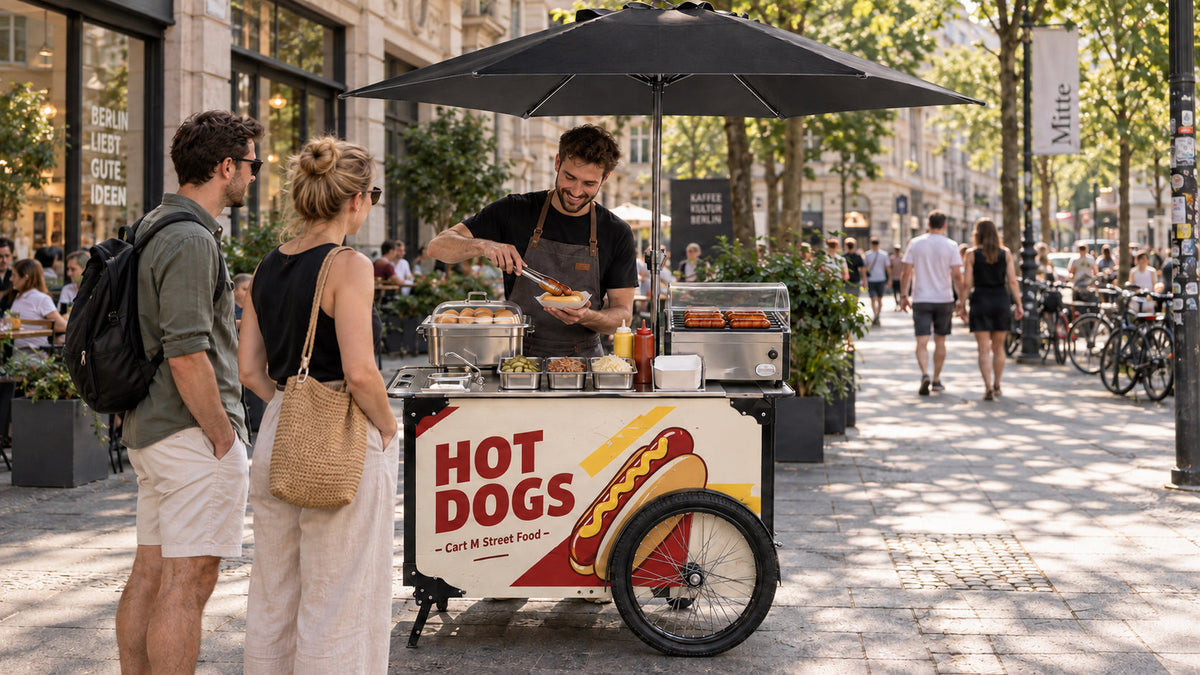
Selling hot dogs is just the start. Drinks, chips, desserts, and snacks usually have higher profit margins and can really boost your daily earnings. Experienced vendors use every sale as a chance to upsell, often by asking, 'Do you want to make it a combo?' This simple question works well. The way you set up your cart matters too. If drinks are at eye level, chips are easy to grab, and your menu shows combo deals, you encourage customers to spend more. The experience also counts: the smell of grilling, the look of sizzling sausages, and your friendly talk all help. Good carts have stainless steel, built-in water tanks, separate hot and cold storage, and smart places for condiments and buns. More vendors now want eco-friendly features, like energy saving burners or bike-powered carts that don’t need fuel. Companies like BizzOnWheels, which make hot dog and street food carts, start by checking health rules and finish by helping you choose colours, signs, lighting, and even how you move inside the cart.
Once your finances and equipment are set, the most important part is building relationships. Street vending is all about being local. People like construction foremen, office staff, security guards, and campus managers control the best spots and steady foot traffic. One of the oldest and best tricks is to give free samples to those who influence others. Bring hot dogs to nearby office workers or job site crews, learn their names, and remember their usual orders. These small gestures help protect your business from competitors. With Americans already spending billions on hot dogs and cities like Richmond eating millions of pounds each year, your job isn’t to create demand. Your job is to meet that demand reliably, safely, and with a personal touch, one sidewalk at a time.
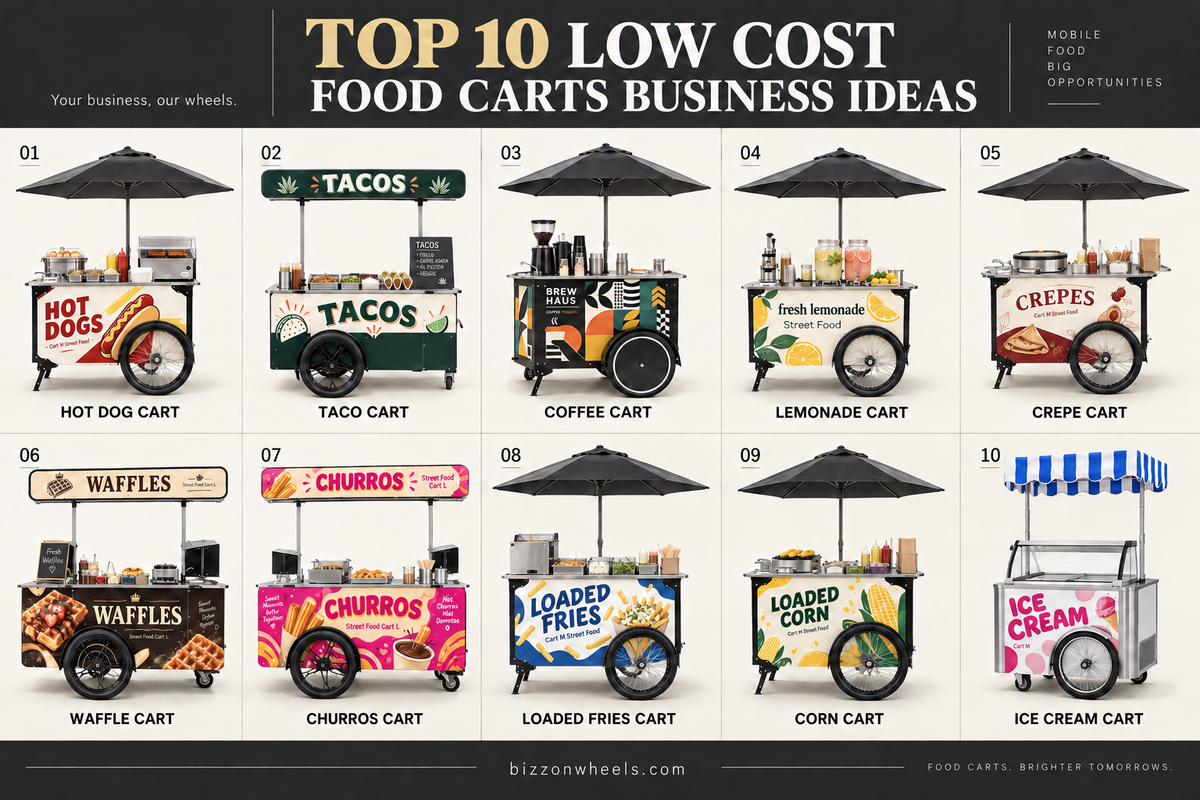
If you want to start a hot dog cart business, buying a professional cart isn’t just for show. It’s the foundation of your whole operation. Working with a company like BizzOnWheels, which has experience with all kinds of mobile carts, can help you turn rules and branding ideas into a cart that’s ready to go from day one. After that, keep improving: learn the rules, choose your locations, update your menu, focus on cleanliness, and treat every customer like you want them to come back. A hot dog cart may be small, but with the right approach, it can be a powerful way to build your own business.
Referrences
· https://www.grandviewresearch.com/industry-analysis/food-trucks-market-report
· https://www.mordorintelligence.com/industry-reports/food-truck-market
· https://www.nyc.gov/site/doh/business/food-operators/mobile-and-temporary-food-vendors.page
· https://dch.wwcowa.gov/healthy_places/mobile_food_units.php
· https://tpchd.org/professionals/food-safety/permits-and-applications/commissary-kitchens/
· https://iris.who.int/bitstream/handle/10665/63265/WHO_FNU_FOS_96.7.pdf
· https://www.fao.org/input/download/standards/13482/CXP_071e.pdf
· https://startupfinancialprojection.com/blogs/capex/hot-dog-cart
· https://www.jim.com/blog/how-to-start-a-hot-dog-cart-business
· https://willydogs.com/hot-dog-cart-startup-costs/
· https://www.hot-dog.org/media/consumption-stats
· https://www.axios.com/local/richmond/2025/07/03/hot-dogs-richmond-consumption-2024
· https://www.theguardian.com/us-news/2025/jul/04/joey-chestnut-hotdog-eating-nathans-contest