When Your Billboard Starts Pedaling: How the World’s Biggest Bike Advertising Display Is Changing Outdoor Marketing
As global advertising spend approaches a trillion dollars, a large share of that money goes to digital screens that people often barely notice anymore. The brands that stand out are trying something different. More and more, that means connecting with people in real places such as festivals, promenades, waterfronts, and plazas where audiences are genuinely engaged. Out of home advertising is making a strong comeback, with the global OOH market expected to surpass $40 billion in 2025 and keep growing as brands look for real world impact beyond digital noise. In this dynamic space, a new kind of billboard is emerging: one so large it could belong on a highway, yet quietly pulled through city streets by a single cyclist.

The return of OOH is about more than nostalgia for print ads. Today, OOH connects digital experiences with the real world, especially as brands invest more and more in experiential marketing. Experts say spending on live brand events will reach hundreds of billions globally, driven by people saying they value experiences over products and support brands that show up in person in their communities. Surveys show that around 85% of consumers are more likely to buy after a branded event, and over 90% feel better about a brand after an experiential campaign. The takeaway for marketers is clear: to build loyalty, you need to meet people face to face, not just online.
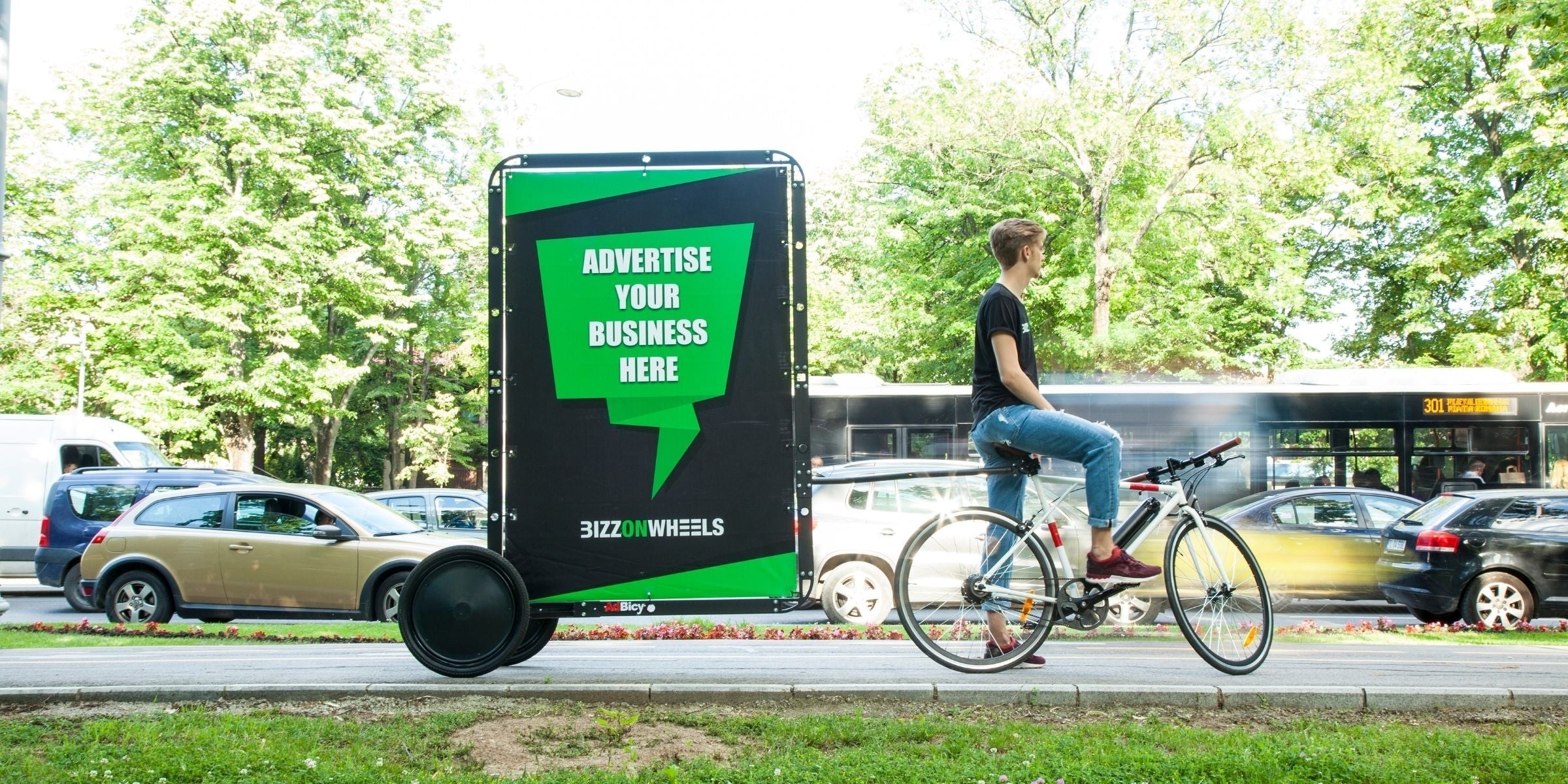
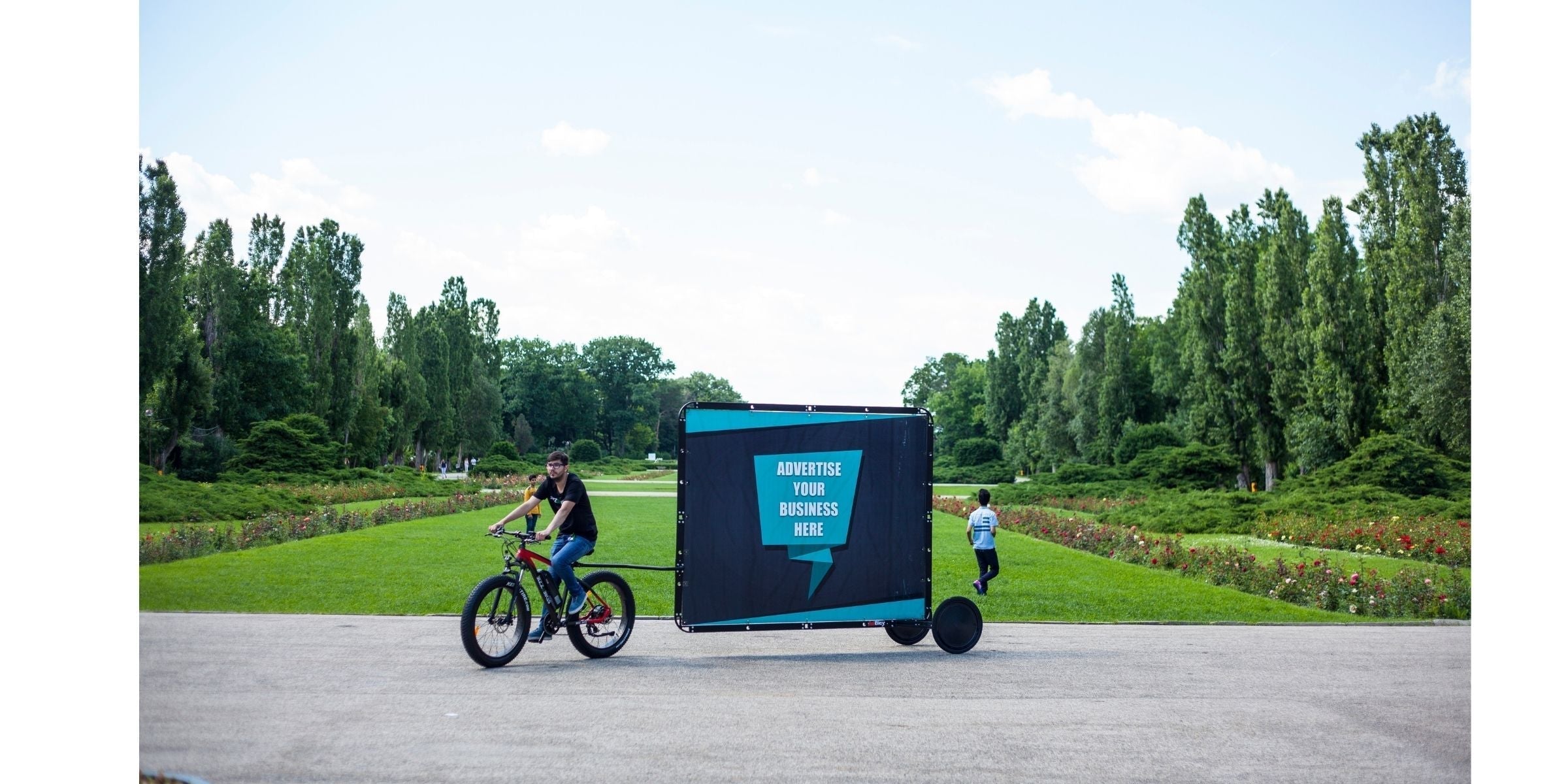
This is where BizzOnWheels comes in. The company, known for mobile business solutions and street ready retail formats, has created what it calls the world’s largest modular bike advertising billboard: AdBicy. This mobile billboard trailer attaches to a regular bicycle or an e bike and offers up to 9.3 square meters of display space about the size of a small bedroom wall visible from up to 300 meters away in open areas. The modular frame allows brands and agencies to adjust the size as needed, so they do not have to buy a new structure each time. While many AdBikes and promobikes are creative but small, AdBicy is more like a full roadside billboard that moves with the crowd.

Size alone does not matter if people do not remember the ad. Mobile billboards stand out in OOH because they deliver results. Studies from several companies show that mobile billboards can reach recall rates of 94 to 97 percent, and one campaign even reported a 107 percent increase in sales after using them. The idea is simple: a large, eye level ad moves right past people when they are not distracted by their phones. With AdBicy’s 9.3 square meter display, it feels more like a moving building than a poster. For brands competing for attention, this kind of street level visibility can make the difference.
How people see the ad is just as important as the numbers. In open spaces like plazas or waterfronts, an AdBicy can create a large visibility zone, dominating sightlines where regular billboards cannot reach. BizzOnWheels designed the frame to be stable at low speeds, so operators can move slowly next to lines outside stadiums, glide through shopping streets, or park at festivals as crowds pass by. This approach is similar to what companies like Zedify have observed with branded cargo bikes: they work well as mobile billboards and are excellent for social media because they fit naturally into the urban landscape. In a world full of digital ads, a brand that arrives by bike stands out in a friendly way.

Cost is another important factor. Traditional large billboards in central city areas can cost tens of thousands of dollars per month, putting them out of reach for many smaller brands. By comparison, once you buy and brand an AdBicy, the ongoing costs are very low just a rider, printed covers, and basic maintenance. BizzOnWheels says companies can pay off the hardware in as little as five days of active use, making future campaigns almost free. Industry data supports this, showing that mobile billboards have some of the lowest cost per thousand impressions in OOH because they can go directly to the best audiences instead of waiting for people to pass by. For brands on tight budgets, owning a promobike is more of an asset than an expense.
Sustainability is now a key issue in outdoor advertising, and bike billboards offer a clear alternative to energy hungry LED screens. OOH networks around the world are working to reduce their environmental impact by using greener materials, more efficient screens, and better reporting. Pedal powered ads go even further. They produce no emissions, add no light pollution, and move at a pace that fits city life. Supporters say bike advertising helps brands reduce their carbon footprint while still reaching people, and research shows that sustainability focused companies often earn more trust and preference. For marketers balancing visibility with climate goals, a human powered AdBicy is easier to justify than another digital screen.

AdBicy’s real strength is how it fits into the rise of experiential marketing. Live events and brand activations are now central to many companies’ growth. Studies show that around 85% of consumers are more likely to buy after an experiential event and nearly 90% feel more positive about the brand. At the same time, up to 98% of attendees create social content during these events, turning offline experiences into digital exposure. A large bike billboard becomes a moving backdrop for all of this whether it is behind a tasting booth, at a product demo, or during a street show. Every selfie in front of it becomes an extra share.
From a planning perspective, this format offers a level of local targeting that static billboards cannot match. Operators can send AdBicy units past university campuses at lunchtime, through business districts in the morning, by stadiums on game days, or along waterfronts in the evening. Agencies already invest heavily in choosing the right locations because they know it can make or break a campaign. A mobile billboard that can follow the crowd and park where traditional billboards cannot reach gives marketers a major advantage. In cities with stricter signage rules or more car free zones, a quiet, pedal powered ad is not just allowed it is often welcomed.

All of this aligns with BizzOnWheels’ core idea: the future of retail and branding is about flexible, street level interactions, not just big stores or online ads. The company has a track record in mobile business solutions from food carts to modular retail bikes and AdBicy is their advertising version. It is a way for brands to turn the city into a moving showroom. For marketers, it is less about buying a bike ad and more about investing in a flexible tool that can support product launches, store openings, sponsorships, and long term brand building.
In today’s market, digital ads are everywhere but real attention is hard to earn. A billboard that can quietly roll into the middle of the action stands out. The world’s largest bike advertising billboard is not just another OOH option. It shows that brands are learning to connect with people in real spaces again. For companies ready to trade some online clicks for thousands of real world views, AdBicy offers a simple deal: buy it once, use it often, and let the streets work for you.