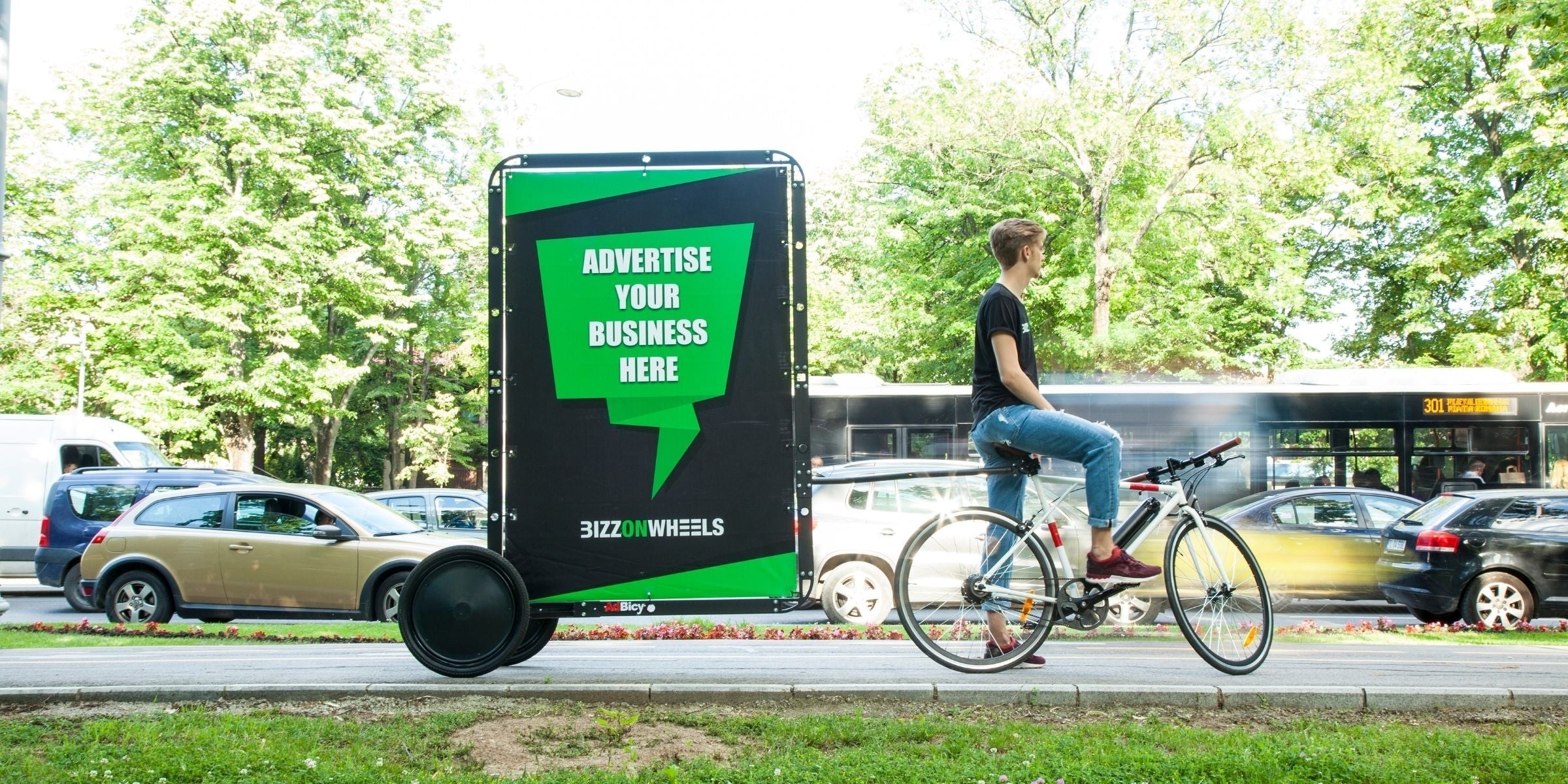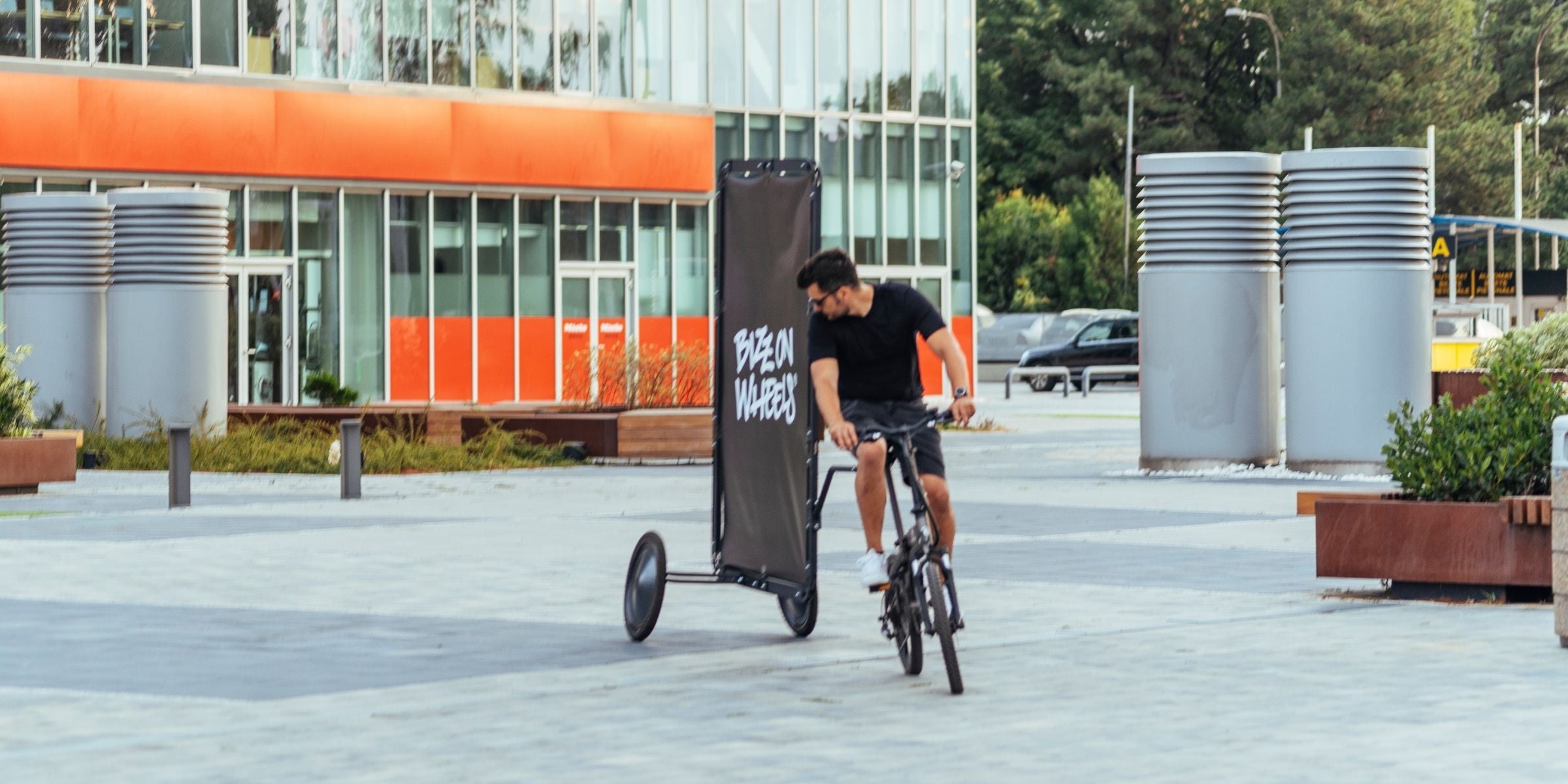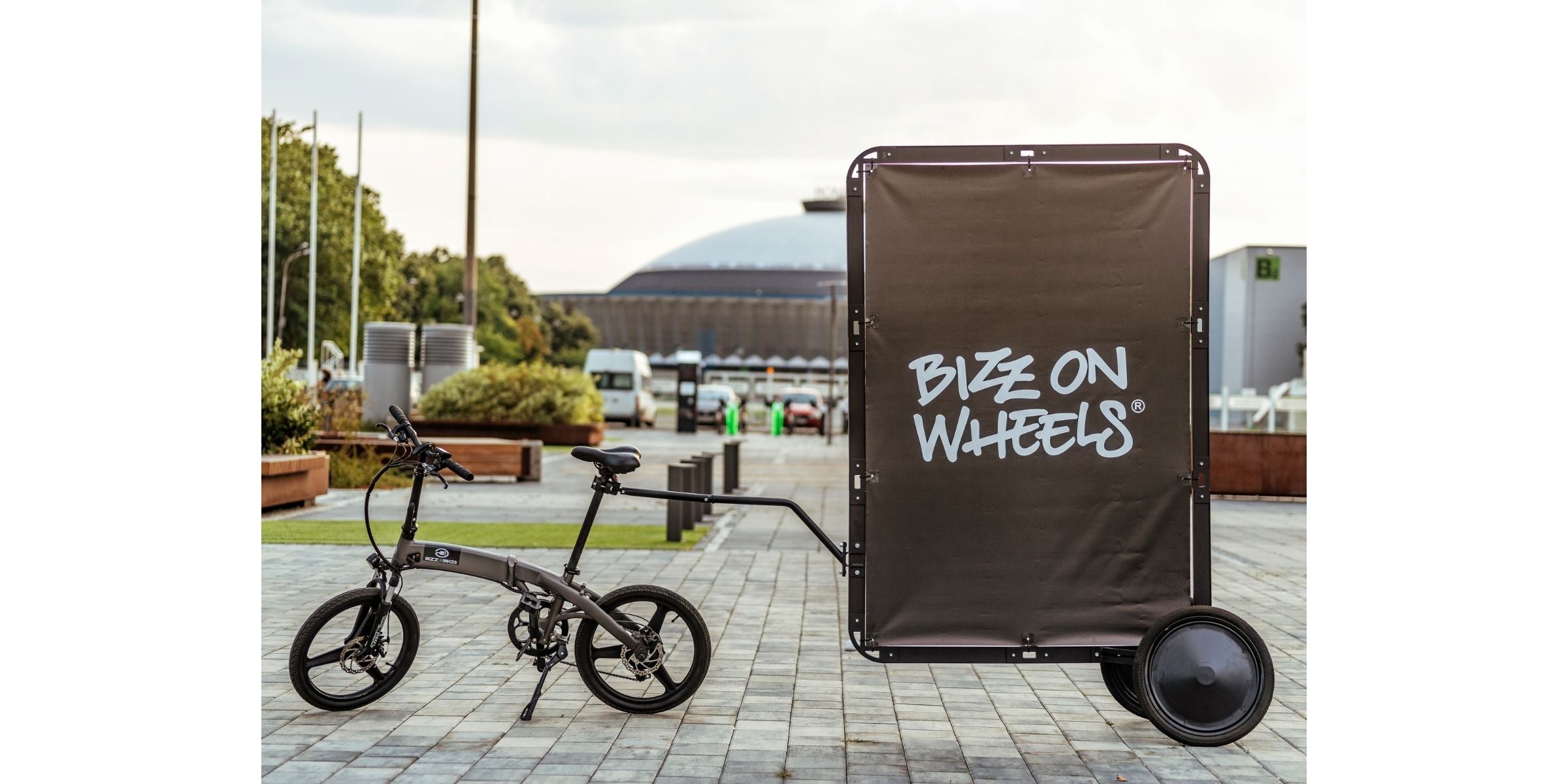
Do You Really Need an AdBike? Why Mobile Billboards Are Becoming the Secret Weapon of Local Businesses
Walk through any big city and you’ll see people glued to their phones, scrolling and checking notifications. Even if it looks like everyone’s attention is on screens, brands are still finding ways to get noticed on the street. Out-of-home (OOH) advertising hasn’t disappeared in the digital age it has simply evolved. Studies show that around 80% of consumers notice OOH ads at least once a week, and they often trust them more than online banners or social media posts. In a world where you can skip almost any content, seeing a message in real life can feel surprisingly real.

That’s where AdBikes come in. These bicycle mobile billboards also known as promobikes, adbikes, or adbicy are gaining more and more attention. While most advertising budgets are shifting toward digital, experiential marketing and live city events are making a strong comeback, with spending in this area expected to grow quickly through 2030. In this context, bike billboards are becoming less of a novelty and more of a practical, “low-tech” solution for businesses that need local visibility. The real question for business owners is no longer “Is this just a fun idea?” but “Will owning an AdBike improve my bottom line more than renting one or putting more money into digital?”
For businesses, an AdBike is more than a bike with a sign it’s a flexible local advertising tool. It works as a mobile billboard at eye level, moving slowly through busy pedestrian areas and commuter routes, often supported by brand ambassadors handing out samples, QR codes, or flyers. Some studies suggest mobile billboards can reach recall rates in the “mid-90%” range far higher than typical online ads (mobileadmarketing.com). Because they’re always on the move, they function more like small traveling events than static posters. They can follow your audience, change routes quickly, and move across multiple neighborhoods in a single day. For companies like BizzOnWheels, which manufacture these mobile billboards, flexibility is a key selling point. Traditional OOH bookings often require long lead times, fixed dates, and minimum spends. If you miss your launch window or the right season, the opportunity is gone. An in-house AdBike, by contrast, can be ready in three days for a new product launch, or used for a single weekend to counter a new competitor nearby. This kind of fast, on-demand presence matters because OOH formats don’t just build awareness: about one in four consumers say they’ve visited a brand’s website after seeing an OOH ad. When your own mobile billboard can be on the street tomorrow with new creative and a trackable URL, the line between branding and performance starts to blur.

The biggest advantage is hyperlocal targeting something static billboards can’t match for the same price. Most brick-and-mortar businesses earn the majority of their revenue from people who live or work nearby. Studies show OOH ads work best when placed near places where people make decisions: stores, transit stations, and entertainment areas. With an AdBike, you can take your message along the routes your customers use every day: past office buildings at lunch, through parks and neighborhoods in the evening, or around stadiums on game days. Instead of hoping people notice a distant billboard, you bring your message directly into their daily routine.
Being close to your audience also gives you room to be more creative. An AdBike isn’t just a poster on wheels it’s like a moving piece of “street theater.” People are naturally drawn to things that move and stand out. A large, highly visible promobike weaving through traffic or parked at a busy spot can grab attention like a street performer or a pop-up event. Outdoor ads are already known to be memorable one study found that more than half of people remember digital billboard messages they see often and experiential marketing goes even further, with surveys showing that 85% of people are more likely to buy after attending a branded event. An AdBike blends media and experience, especially when you add staff, samples, and visuals designed for social sharing.

Financially, owning an AdBike becomes more appealing once you’ve covered the upfront cost. Changing banners on a quality bike billboard is inexpensive, so you can run short, targeted campaigns three days for a grand opening, a week for a new class, or two days for a flash sale without renegotiating contracts. Experiential marketing is widely seen as a high-return channel: most marketers say it delivers more value than many other formats, with success rates in the high-30% range for real business outcomes. Because ongoing costs are low and you can deploy it whenever you need, owning an AdBike can quickly become more cost-effective than renting if you run campaigns frequently.
There’s also a psychological factor that financial leaders sometimes overlook. Advertising is usually treated as an expense, but physical assets are not. When budgets tighten, marketing spend is often cut first, including OOH. Yet investment in experiential marketing and events keeps growing as brands look for deeper engagement. If you own an AdBike that’s already paid off, you’re naturally motivated to keep using it. The main costs are the rider, the creative work, and a new print. It’s harder emotionally and practically to let a physical asset sit unused than to cancel yet another online ad campaign.

Of course, owning an AdBike comes with its own costs. The initial investment competes with other needs: buying a new espresso machine, renovating a fitting room, increasing your digital ad budget, or stocking up for the holidays. For small businesses operating on tight margins, spending money on a promobike instead of something more “essential” can feel risky. The basic rule is: if you don’t plan to run local outdoor campaigns several times a year, it’s hard to justify buying instead of renting.
There are also practical considerations: storage, logistics, and maintenance. A professional AdBike isn’t stored like a folding scooter. It needs secure space, regular cleaning, occasional tire and brake fixes, and a plan to get it to its starting point every day. Companies such as Streetfighter Media in Australia and some European eco-mobility agencies highlight the environmental benefits of bike billboards lower emissions, less waste, and a clear “green” image but you only get these benefits if your team can manage the daily routine. For many city businesses this is manageable; for those with limited space or no back room, it can turn into a hassle that makes you use the bike less often.
Staffing and rules are another piece of the puzzle. Someone has to ride the bike, and it helps a lot if they can also act as a brand ambassador. Some businesses use their own staff during slower periods; others hire freelancers or agencies. You’ll need clear policies on working hours, weather, safety gear, and what your team should say to the public. Local regulations also vary widely. Some cities encourage creative uses of bikes for advertising, but they may still have rules about where and when ads are allowed. Before buying, check how your city classifies mobile billboards are they treated as transit, street furniture, or something else?
Digital channels are still highly effective when you measure them click by click, and digital out-of-home (DOOH) screens are proving very persuasive, with industry studies suggesting that more than three-quarters of viewers take some form of action after seeing a DOOH ad (OAAA). You’re not choosing an AdBike in isolation you’re choosing it instead of more search ads, more social impressions, or another static billboard. The case for ownership is strongest when the AdBike isn’t just an awareness tool, but an integrated part of your acquisition funnel using QR codes, landing pages, promo codes, and CRM hooks designed to turn street attention into measurable results.

Owning an AdBike makes the most sense in industries where location matters enormously. Take gyms and fitness studios. Their main challenge is high churn, and most potential members live or work nearby. In the UK, a Manchester gym partnered with a bike advertising company to send riders through busy shopping areas at peak hours with clear membership offers. The result was a noticeable increase in awareness and sign-ups, at a modest cost. For gyms with strong profit per member, just a few extra sign-ups per month over a year or two can pay for the bike billboard.
Restaurants, cafés, and bars face a different problem: heavy competition. In busy city centers, there may be a dozen places to eat within a five-minute walk. In that environment, being nearby and top of mind is crucial. Delivery companies already use bikes for advertising for example, Deliveroo in Abu Dhabi turned delivery bikes into digital billboards, using location-based ads to reach people as they move around. A restaurant with its own AdBike can do something similar on a smaller scale: ride through office districts with lunch specials before noon, circulate through parks and around venues in the evening, and make a big splash in the neighborhood during the first months after opening. With QR codes linking directly to ordering or reservations, you’re not just building awareness you’re creating a hands-on performance marketing tool.
In retail, advertising bikes can act as a bridge between e-commerce and brick-and-mortar. In North America and Europe, bike-share programs already use branded panels at busy docking stations to reach people walking or driving by. Retailers who own their own AdBike can take it further with clear signage like “3-minute walk → Main Street Store,” promote in-store events or new collections, and use the bike to encourage loyalty sign-ups or app downloads. Stores with more than one location can share the bike between branches, spreading the cost while maintaining a steady presence in the city.
For larger brands, budget isn’t the main constraint integration is. For them, AdBikes and other mobile billboards work as a high-impact, relatively low-cost complement to mass media. Talk360 in South Africa, for instance, used moving billboards on the backs of delivery bikes not only to build awareness in key neighborhoods, but also to turn riders into informal sales agents distributing flyers and driving customer acquisition on the ground (motionads.co). For a big local brand already investing in TV, digital, and sponsorships, a fleet of promobikes becomes a flexible tool for neighborhood-level activations, CSR campaigns, influencer collaborations, and social-media content a way to make the brand feel physically present in the city, not just on screens.
So, should you buy an AdBike or rent one when you need it? The best way to decide is to look at how often you’ll use it. If you’re in a busy city, get most of your customers from nearby, and run lots of promotions or launches, owning an AdBike from a company like BizzOnWheels can become a reliable part of your marketing. Many brands start by renting to test results, tracking impressions, foot traffic, and digital responses from QR codes. If you find yourself using it often and seeing strong results, buying becomes a practical business decision not just a creative one.
You don’t need an AdBike the way you need inventory, staff, or electricity. But if you run a gym, restaurant, retail store, or a growing local brand in a big city and your success depends on foot traffic and local awareness a well-designed mobile billboard is more than a nice-to-have. It’s a tool you control that puts your brand right where your customers are, turns promotions into real-world events, supports your digital marketing, and when used often and smartly makes your brand feel like it’s everywhere in the city. The bike won’t help if it stays in storage the real value comes from how often and how intelligently you use it.