How To Start A Food Cart Business In 2026: A Street-Level Playbook For First-Time Entrepreneurs
A well-run food cart on a busy city sidewalk can be surprisingly successful. Even though it uses only a small space, it can make as much money as some small cafés. The global street food market is now worth about USD 250 billion and is growing by 8 to 9 percent each year as more people move to cities, travel, and look for quick meals. At the same time, the food truck industry has become a multibillion-dollar business, with recent estimates putting its value at over USD 6 billion in 2024 and expecting it to nearly double in the next ten years. For entrepreneurs, this means that if you control your costs, choose the right setup, and build a loyal customer base, a food cart can be one of the most affordable ways to start in the food industry.

Street food is not just a trend. It has grown because of economic pressures, cultural changes, and new technology. Many people face higher living costs and choose quicker, more affordable meals instead of full-service restaurants, but they still want good quality. Reports show that a growing middle class is willing to spend on special but affordable meals, often in open-air or pop-up settings. Foodie culture is now common, and diners expect new and interesting options like kimchi tacos, vegan smash burgers, and fusion desserts. With this curiosity and the convenience of food near offices, stadiums, or metro stations, street vending is becoming a key part of today’s food service.
From the customer’s perspective, the appeal is almost embarrassingly straightforward. Street food is where they already are: office parks at lunchtime, campuses between lectures, For customers, the appeal of street food is simple. It is available where they already spend time, like office parks at lunch, campuses between classes, festivals, and weekend promenades. Street food is usually cheaper than restaurants, faster than delivery, and more interesting than a supermarket sandwich. Analysts say that portability, speed, and the overall experience are the main reasons people come back. Successful operators treat their cart as more than just a place to sell food. It becomes a small stage for marketing, with eye-catching visuals, great smells, a memorable name, and a vendor who knows how to engage with customers.0, including construction, equipment, permits, and working capital, according to recent industry guides and financial modeling tools. Food trucks are cheaper but still significant: multiple 2025 cost breakdowns put the total launch budget between roughly USD 50,000 and USD 250,000, depending on whether the vehicle is used, retrofitted, or fully custom. By contrast, a professional, fully equipped food cart can often be acquired in the USD 3,000–10,000 band, with some manufacturers quoting even tighter, focused “starter” builds for entry level concepts. It is still a serious investment, but it is an order of magnitude lower than a restaurant and crucially, it moves if your first location proves disappointing.

Before getting caught up in the idea of serving brunch from a shiny food cart, it is important to face the tougher parts of the job. Running a cart is physically hard work, with early mornings in the kitchen, long hours on your feet, and constant prep, service, and cleaning. Weather and seasons can make sales unpredictable, especially for outdoor vendors in rainy areas. Good locations like office districts, tourist spots, and stadiums are limited and competitive. Insurance providers and business advisors often say mobile food is “lower capital, not low risk,” meaning you still take on all the operational and financial challenges at first. The most common complaints from new operators long hours and unpredictable income are not failures, but just part of a business that depends on weather, foot traffic, and impulse buys. Being realistic about these challenges from the start will help you stick with it.
Planning starts with something basic but important: market research. No spreadsheet can guarantee a spot will work, but research helps you make better decisions. Experts and local reports focus on key questions: who walks by, when, how much they might spend, and what mood they are in. Office workers, students, and tourists all have different habits, break times, and spending patterns. A careful founder will visit possible locations at different times, count people, see what competitors are selling, and talk to building managers or event organizers about changes. This real world information should guide your concept, pricing, and schedule. It also tests your willingness to do the hard work. If you do not enjoy this research, the daily routine of running a cart may be tough. Many operators are required to work from a licensed commissary kitchen and return there daily for cleaning, resupply, and to fill fresh-water tanks and empty wastewater. Pushcarts that handle unpackaged food often follow the same sanitary rules as full-scale restaurants: temperature control, hand-washing stations, food-grade surfaces, and safe wastewater disposal. Internationally, Codex Alimentarius guidelines shape many national street food regulations, focusing on approved locations, safe construction, and strict food-handling practices to prevent food borne illness. In addition to health codes, most operators need a general business license, sales tax registration if needed, and the right vehicle or towing insurance. A reputable food cart manufacturer cannot replace legal advice, but they can design your cart to meet common requirements, such as food-grade surfaces, proper water and waste tanks, and layouts that make inspections easier.
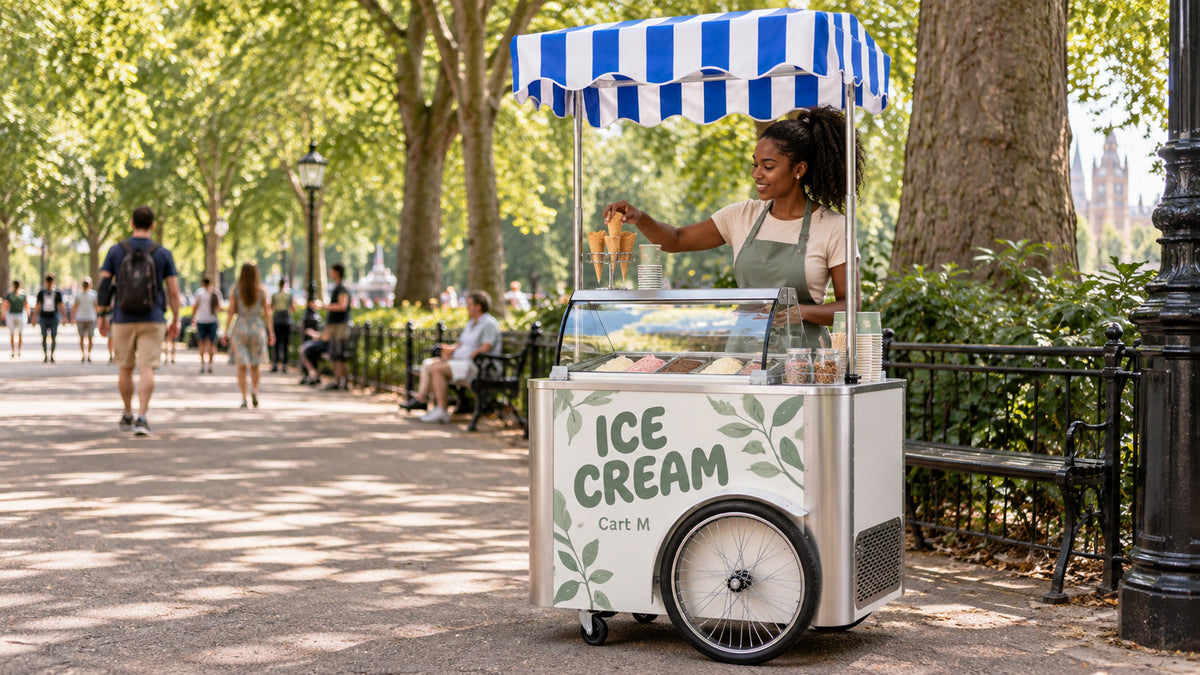
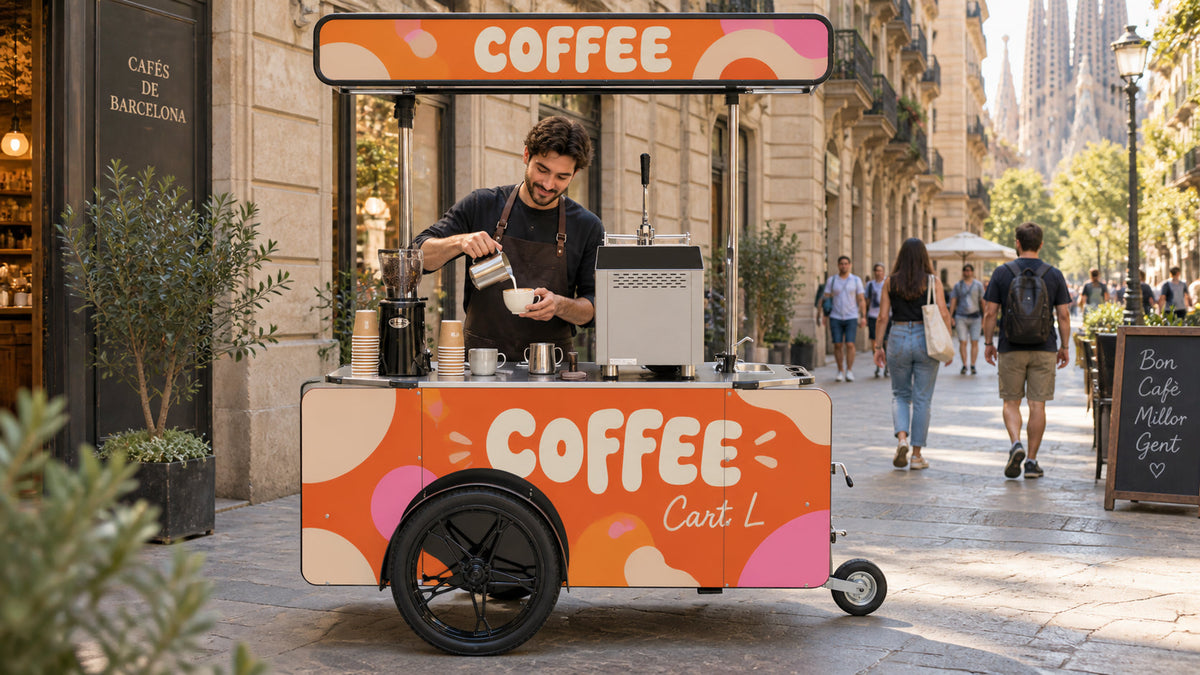
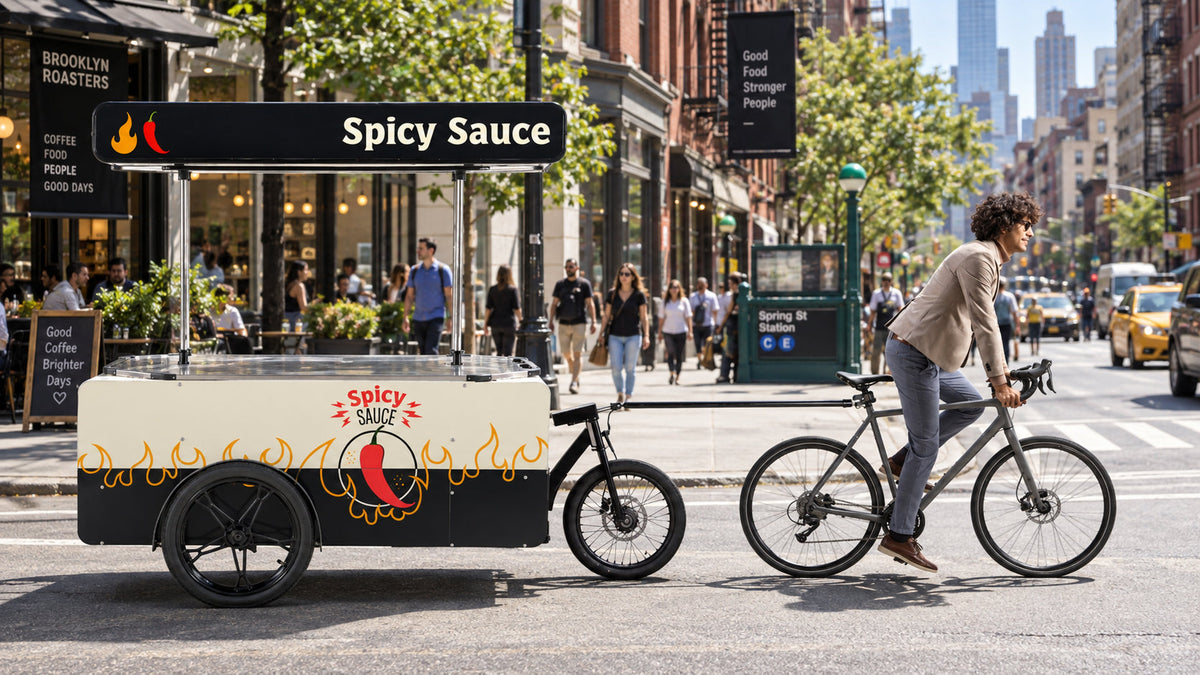
Choosing the right setup stand, cart, trailer, or truck is one of the most important decisions you will make. Stands and kiosks work well in malls or indoor markets and protect you from bad weather, but they are not mobile and often cost more to rent. Concession trailers are popular at big events because they can stay in one place and serve many people, but they need towing and usually cost more to set up. Food trucks are like full kitchens on wheels, but they often require a large investment. For many new owners, a mobile food cart is the best choice. It is small enough to move into busy areas, affordable to finance, and flexible for testing different markets or changing your concept. Many BizzOnWheels clients start with a cart, improve their brand and menu over a season or two, and then expand to more carts, trailers, or even permanent locations once they know there is demand.

Designing your concept, menu, and supply chain is when your project starts to feel real, and staying focused helps a lot. In the growing gourmet street food market, successful operators do not try to offer everything they specialize. A short menu with three to five standout items usually works better than a long list. It makes prep easier, speeds up service, and helps customers remember your brand. The best ideas match what you like to cook with what people want to buy at that place and time. Each menu item should be easy to prepare, quick to serve, and packaged for people on the go. Using local ingredients or eco-friendly packaging can also set you apart, especially with younger customers who care about sustainability.
Supply is just as important as your menu, even if it is less obvious. Wholesale distributors offer steady prices and regular deliveries, while farmers’ markets and local producers provide fresh ingredients and stories you can share online. Most operators use a mix of both. At first, you might buy too much of something that spoils or run out of a popular item during service. The main goal in your first season is to learn these patterns, improve your ordering and reduce waste, and build strong relationships with suppliers who can adapt as your business grows. A well-designed cart from a specialist like BizzOnWheels can help with storage, refrigeration, and workflow, which are all important for smooth operations.
Even the best idea needs a solid business plan. Restaurant industry data shows that many businesses fail because they do not have enough capital, expect too many early sales, or run into cash flow problems before food quality is even an issue. The same thing happens in mobile food, just with smaller amounts. Recent cost breakdowns show that after adding permits, inventory, marketing, and a cash buffer, a realistic start-up budget is usually at the higher end of the USD 3,000–15,000 range, not the lower end that some forums suggest. Small restaurant templates recommend keeping a cash reserve of about 20 to 25 percent of your upfront costs to handle slow periods and surprises. Mobile food operators should do the same. Your plan does not have to be formal, but it should clearly show your start-up budget, running costs, pricing, sales forecasts, and what you will do if things do not go as planned.
The old saying for restaurants was “location, location, location,” but for mobile food today, it is “location plus notification.” Social media has changed how carts and trucks attract and keep customers. Studies show that active use of social media—first Twitter, now Instagram and TikTok directly boosts daily sales, especially for operators who move around often. Marketing experts now see platforms like Instagram as essential, not optional, because they help with awareness, longer lines, and event invites. For carts, the approach is similar: share clear photos of your cart and food, update your location, post behind-the-scenes clips, and re-share customer content with credit. Your cart is both a place to sell and a moving advertisement, showing off your brand in person and online.
This brings us to the question most founders ask: can a food cart really make money? The answer is that it depends. On a slow weekday in a less busy spot, you might only cover your fixed costs. But on a busy summer weekend at a festival or sports event, a well-placed cart with a focused menu can serve hundreds and make thousands in a day. Surveys and interviews with operators show that three things matter most: steady foot traffic, careful cost control, and fast service. If you get these right, a food cart can pay back its start-up costs in one good season and generate extra cash for growth. If you miss on any of them, even great food will not be enough.

What sets successful operators apart is not usually a culinary degree. The founders who do well share a few key traits: they care deeply about quality, are flexible with menus and locations, take branding and social media seriously, and treat every customer as a potential regular. Surveys of mobile food businesses show that great food, adaptability, smart marketing, and customer focus matter more than formal training. When this mindset is combined with strong equipment—commercial carts made from food-grade materials and designed for hygiene and easy use a small business can grow far beyond its first location. Many BizzOnWheels clients have followed this path, starting with one cart and expanding to a fleet or even a full company, using mobile retail solutions to lead the way.
References
https://www.futuredatastats.com/street-food-market
https://dojobusiness.com/blogs/news/street-food-market-growth
https://www.alliedmarketresearch.com/gourmet-street-food-market-A08818
https://www.gminsights.com/industry-analysis/food-truck-market
https://www.mordorintelligence.com/industry-reports/food-truck-market
https://cloudkitchens.com/blog/how-much-does-a-food-truck-cost/
https://www.restroworks.com/blog/food-truck-cost/
https://www.kimecopak.ca/blogs/f-b-business/food-truck-vs-food-cart
https://cart-king.com/cart-and-kiosk-articles/food-cart-startup-costs-complete-breakdown-for-2025/
https://startupfinancialprojection.com/blogs/capex/small-restaurant
https://www.webstaurantstore.com/article/517/how-much-does-it-cost-to-open-a-restaurant.html
https://www.fliprogram.com/blog/mobile-food-business-vs-restaurant
https://bpmhd.org/wp-content/uploads/2024/09/BMP-Mobile-Food-Unit_packet-2.pdf
https://www.henrystarkhealth.com/DocumentCenter/View/1648
https://tpchd.org/professionals/food-safety/permits-and-applications/mobile-food-units/
https://www.fao.org/fao-who-codexalimentarius
https://pmc.ncbi.nlm.nih.gov/articles/PMC9675948/
https://scholarworks.umass.edu/bitstreams/bf05c0a4-f72d-4d11-bd06-7bd015a9f168/download
https://www.entrustmarketingwa.com/why-is-social-media-so-important-to-the-food-truck-industry
https://strattz.com/social-media-marketing-for-food-trucks-a-complete-guide/
https://www.restauranttimes.com/blogs/operations/food-cart-vs-food-truck/