Food Cart vs Food Bike: How to Choose the Right Format for Your Niche
If you’re starting out in street food, deciding between a food cart and a food bike is one of your first big choices. The right setup can make things like permits, finding locations, and growing your business much easier. The wrong one can bring headaches with logistics, rules, and cash flow.
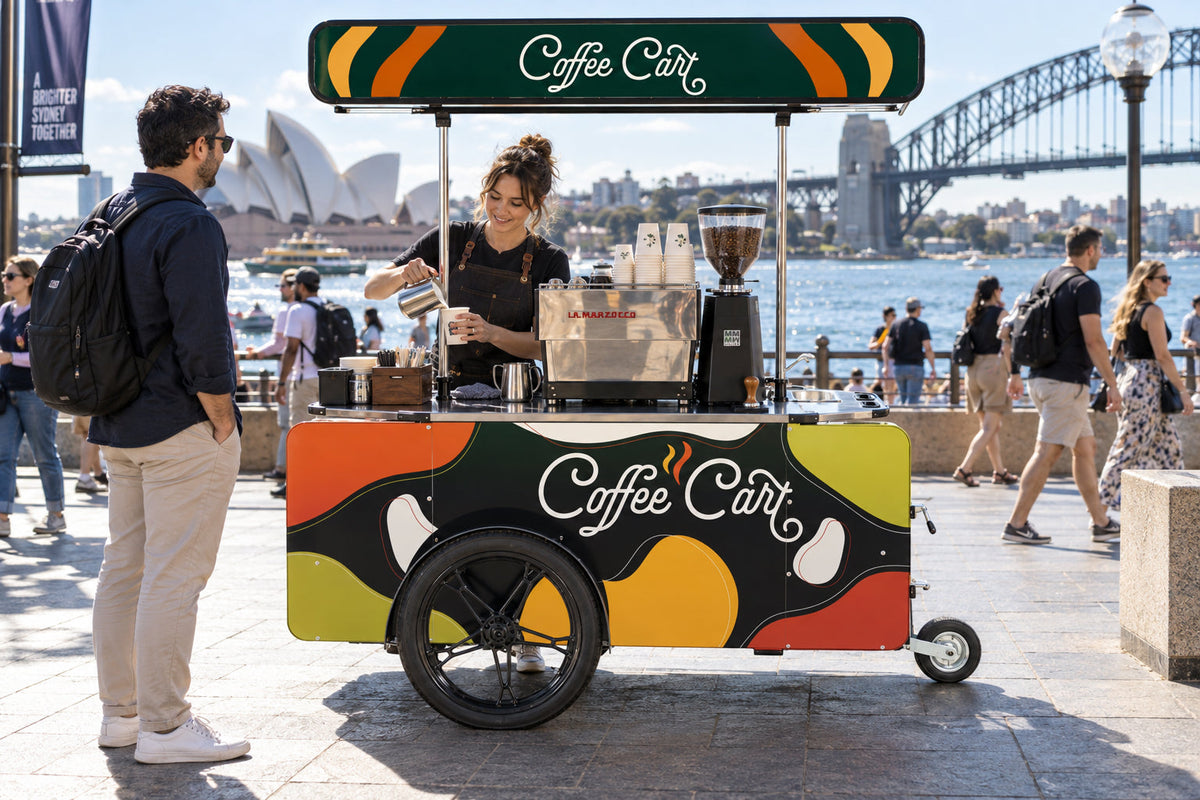
Serving espresso on a busy street or gelato by the beach sounds great, but the most important thing is matching your setup to your food and your location. What you sell and where you set up will help you decide if a fixed cart, a mobile bike, or a mix of both is best. Coffee stands work well near office buildings or plazas with lots of morning commuters. Lemonade and juice sellers do best in parks and on promenades. Hot food vendors need enough space and power for busy lunch crowds or festivals. Experts say street food is moving toward more specialized, high-quality options with focused menus instead of general kiosks. This means your equipment really matters. A good food cart can handle quick orders if it has the right stations, refrigeration, and water, but a bike that looks nice but isn’t practical can slow you down.
Cost is another big thing to think about. Starting a full food truck usually takes between USD 50,000 and USD 250,000 for the vehicle, setup, permits, and working money. That makes sense for busy kitchens with big menus, but it’s often too much for simple ideas like coffee, ice cream, or snacks. A good food cart costs much less, with total startup costs (including permits, supplies, and branding) usually in the low to mid five figures. Food bikes, especially those built on cargo or e-cargo frames, can be even cheaper, especially for drinks and cold foods. For example, Coffee-Bike in Germany sells entry level mobile cafés starting at about EUR 15,000, showing that bike-based setups can offer full café service for a lot less than a truck.
Cost isn’t the only thing to think about. Food bikes are popular with city planners and sustainability teams because they’re mobile and have a low impact. In European cities, using cargo bikes instead of diesel vans for deliveries has cut emissions by 40 to 98% and also reduced noise and traffic. The same benefits apply to mobile food. Food bikes can get into low-emission zones, historic areas, and pedestrian streets where vans and trailers can’t go, giving you an advantage. For cities and landlords who care about sustainability, a bike-towed unit shows you’re serious about being eco-friendly.

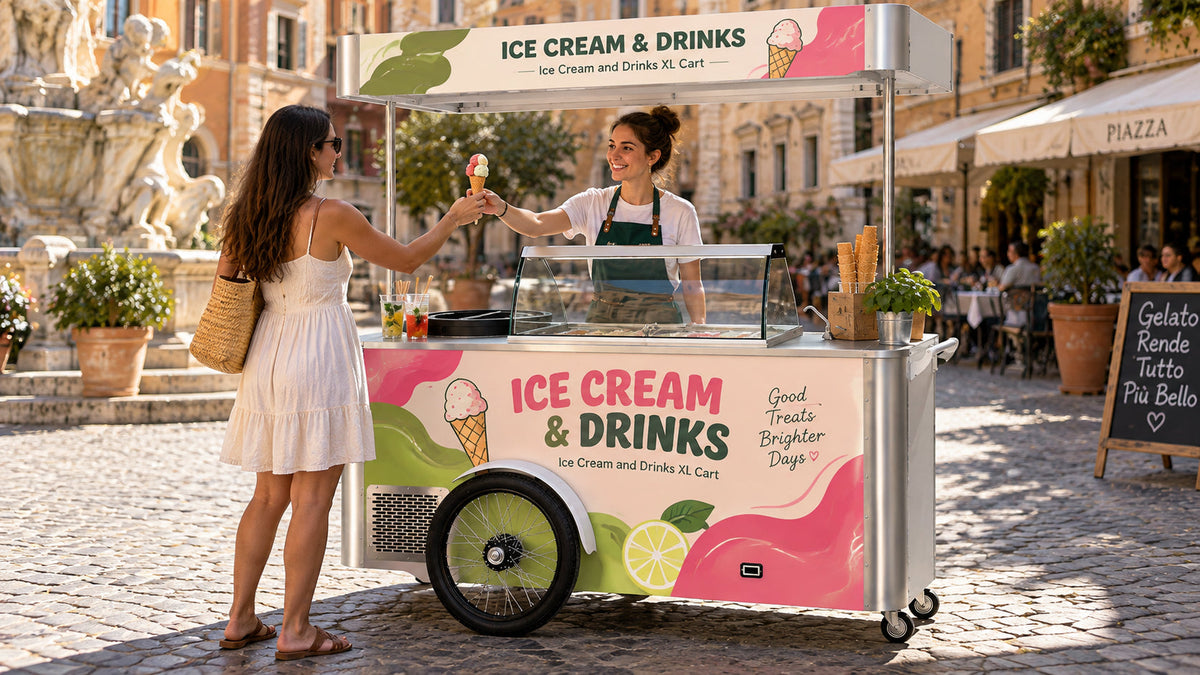
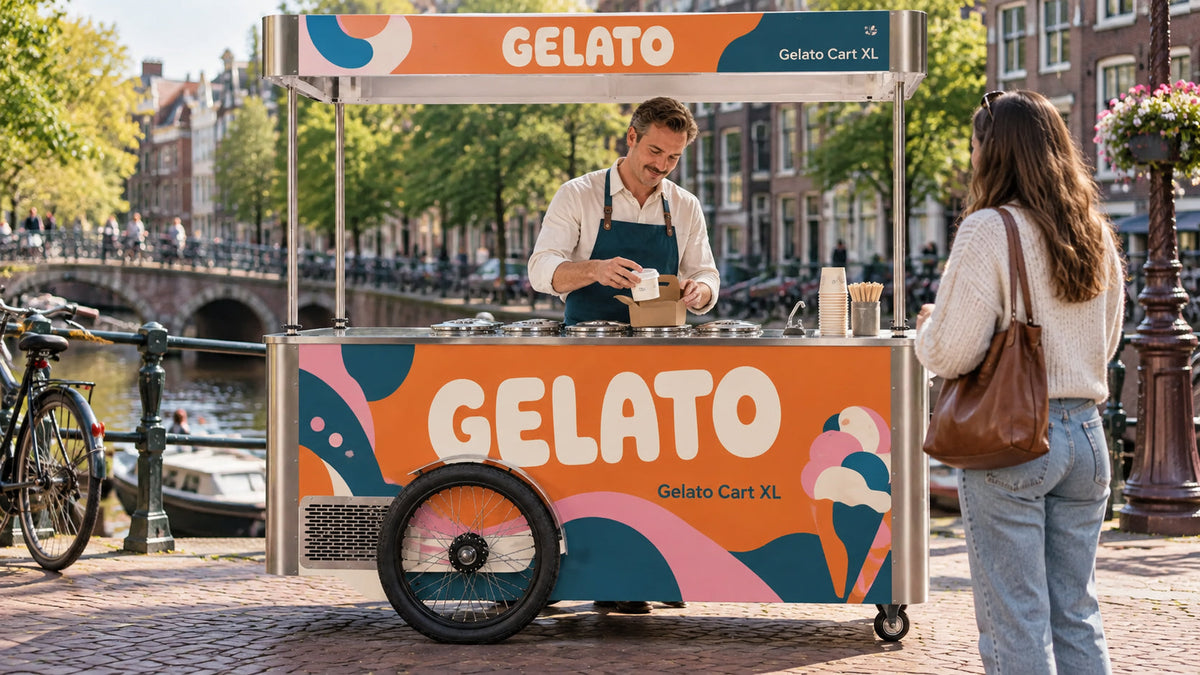
Food carts stand out because they work well in many places. A compact M or L cart can fit through doors, hallways, and elevators, so you can use it in malls, office lobbies, and train stations during the week, then move it to markets or events on weekends. Their small size meets fire safety and clearance rules in most indoor spaces, but they still have room for sinks, under-counter fridges, and branded canopies. Health inspectors often like carts because everything like water tanks, hand-wash sinks, and prep areas is built into one organized unit. Some carts, like those from BizzOnWheels, can be used as push carts or towed by a bike, giving you two options: a stable cart for indoor spots and a mobile food bike for outdoor events. If you want to serve ice cream, you’ll need backup tubs, scoop washers, toppings, and cones. Hot food menus need planchas or grills, hot-holding, ventilation, and more power. In those cases, an XL cart is like a small trailer still compact compared to a full truck, but big enough for two stations, like coffee and pastries, without making the workspace too crowded. For simple drink focused setups, a Cart M or a dedicated food bike can be much leaner: just a small menu, a slim fridge, and a hand-wash sink, all set up for speed. Coffee bike guides recommend this approach: keep the menu tight and pick equipment that fits a bike-based bar.
Permits and rules usually get more complicated as your equipment gets bigger and your menu gets more complex. In many places, a hand-pushed or bike-towed cart selling simple foods and drinks can use basic mobile vending rules, especially in parks, promenades, and at events, as long as you have things like a hand-wash sink, food-safe surfaces, and good water management.If your setup gets bigger and you add things like frying or gas, it starts to look like a full mobile kitchen to regulators, which means more rules for fire safety, ventilation, and gas. Trailers and trucks get the most attention from inspectors, which is good for public health but means more paperwork. If you want to start quickly with a simple product, a bike or M/L cart is usually the easiest way.
Your choice of setup affects your daily sales and profits. For example, a coffee cart in a busy mall can serve 60 to 120 drinks per hour with a small team, so four busy hours could mean 300 to 350 sales. At about EUR 3 per drink, that’s almost EUR 1,000 in daily revenue before adding food. After paying for ingredients, mall fees, staff, and supplies, you can still make a good daily profit if you run things well. Coffee-bike and cart franchises report monthly sales in the low five figures at good locations. A lemonade or juice bike in a park might sell less and charge lower prices, but costs and workload are also lower, so profits can still be strong, especially with a small investment and a seasonal setup. On the other hand, hot snack trailers at big festivals can make thousands per day, but only if you pay higher event fees, hire more staff, and take on more risk.

That’s why BizzOnWheels recommends seeing your business as a journey, not just a one-time choice. Many people start with a food bike or M/L cart to test their idea in busy spots. As demand grows and lines get longer, you can add more carts or move up to an XL model. Growing your business often means running several units at once—like two carts at different events, or a bike and a cart—instead of buying one big setup. This is similar to trends in city logistics, where using both vans and cargo bikes has cut emissions by up to 80% and made operations more flexible. For street food, this means your brand can be at a corporate campus, a city center, and a festival at the same time, reaching more customers without losing quality.
In the end, choosing between a food cart and a food bike comes down to what works best for your business, not just how cool a bike looks in a historic square. If you need more equipment, storage, and two workstations, a Cart L or XL is probably your best bet, and you can tow it by bike if needed. If you want very low costs, strong eco-credentials, and the ability to move easily through parks, campuses, and promenades, a dedicated food bike or a slim Cart M in bike mode is likely the best choice. In both cases, the quality of your equipment is important. Features like strong wheels, good brakes, built-in sinks, water systems, and power options help make your business reliable and trusted by inspectors and customers. With the right setup, the real question is how quickly you can grow from one unit to a whole fleet of mobile food businesses leading the next wave of street vending.
References
https://www.futuredatastats.com/street-food-market
https://www.grandviewresearch.com/industry-analysis/food-trucks-market-report
https://www.expertmarketresearch.com/reports/gourmet-street-food-market
https://www.restroworks.com/blog/food-truck-cost/
https://pos.toasttab.com/blog/on-the-line/how-much-does-a-food-cart-cost
https://cart-king.com/cart-and-kiosk-articles/food-cart-startup-costs-complete-breakdown-for-2025/
https://coffee-bike.com/en/vorteile-franchise/
https://coffee-bike.com/en/
https://espressoacademy.it/en/guide-en/a-step-by-step-guide-on-how-to-open-a-coffee-bike-cart/
https://tpchd.org/professionals/food-safety/permits-and-applications/mobile-food-units/
https://www.vianova.io/blog/the-urban-cargo-bike-revolution-a-playbook-for-european-cities
https://marketplace.eiturbanmobility.eu/best-practices/decarbonising-urban-logistics-with-cooperative-micro-depots-in-berlin
https://innoenergy.com/news-resources/study-logistics-companies-could-save-over-half-a-billion-euros-annually-using-mixed-electric-delivery-fleets/